
Why your business is losing customers between channels (and how AI call, chat & email automation fixes it)
You know that feeling when you’re trying to get something sorted with a company, and you have to explain yourself over and over again? You start with a chat on their website, then you get an email, and finally, you have to call them. Each time, it’s like you’re starting from scratch. That’s a major channel-gap problem, and it’s probably why you’re losing customers without even realizing it.
When your communication tools aren’t talking to each other, customers fall through the cracks. They get frustrated, and frankly, they’ll just go somewhere else. It’s not just about having a phone number, an email address, and a chat window available. It’s about making sure those channels are connected, so the customer’s journey is smooth, no matter how they reach out. This disconnect is a silent killer of conversion rates.
Think about it:
- A customer asks a question via chat, but the agent isn’t available. They leave your site.
- Later, they send an email, but it gets buried in a general inbox, taking days to get a generic response.
- They finally call, only to have to repeat their entire issue to someone who has no idea what happened before.
This kind of fragmented experience makes your business look disorganized and uncaring. Customers expect continuity. They want to start a conversation through chat, continue through email, and receive the same level of service throughout the journey. They want to speak once and be understood across every channel. If you can’t provide that, you’re making it too easy for them to walk away.
The reality is, customers are constantly jumping between different ways of contacting you. If your systems can’t keep up and provide a consistent experience, you’re actively pushing them towards your competitors. It’s not a matter of if this is happening, but how much it’s costing you.
AI-powered automation is changing this. It’s not just about having more tools; it’s about making those tools work together. Imagine AI connecting your calls, chats, and emails, so every interaction builds on the last. This unified approach means no more repeating yourself, faster resolutions, and a much happier customer. It’s about creating a single, connected customer journey, which is something companies with strong omnichannel capabilities are already seeing huge benefits from.
Why siloed communication tools are quietly killing your conversion rate
Customers today don’t stick to just one way of talking to businesses. They jump between chat, email, social media, and phone calls without a second thought. They expect you to keep up and remember the whole conversation. When your systems don’t talk to each other, customers have to repeat themselves over and over. This isn’t just annoying; it’s a major roadblock that stops people from becoming paying customers. It’s like trying to run a race with hurdles at every turn. This constant back-and-forth frustration is a direct path to lost sales and unhappy customers.
Here’s a look at how these gaps cause problems:
- Lost in Translation: A customer asks a question on chat, gets a partial answer, then emails for more details. If the email support team doesn’t see the chat history, they might give a completely different answer or ask the customer to start all over. This makes the customer feel unheard and unimportant.
- The Endless Wait: Long hold times on the phone are bad enough. But when a customer tries chat or email and gets no response for hours, or even days, they’ll likely look elsewhere. Many customers expect quick responses when reaching out to a business, and Poor customer experiences can significantly impact customer loyalty and retention.
- Agent Confusion: Your support team is stuck jumping between different screens and tools, trying to piece together a customer’s history. They can’t see the full picture, leading to mistakes, longer resolution times, and more frustrated customers. This makes it hard for them to do their jobs well.
When communication channels aren’t connected, you’re not just losing efficiency; you’re losing loyalty. Disconnected systems create blind spots. Support reps might miss messages, and sales teams might be out of the loop on email threads. This lack of connection can lead to lost sales, bad reviews, and damage to your brand’s reputation. Customer experience isn’t just one department’s job; it’s the core of your entire business. Every interaction is a chance to build trust or lose it.
It’s not just about offering more ways to connect; it’s about making sure those connections are smooth and informed. If your systems are separate, you’re essentially asking customers to navigate a maze every time they need help. This is a major reason why potential customers walk away before they even make a purchase, impacting your lead conversions.
What AI-driven unified communication actually means in 2026
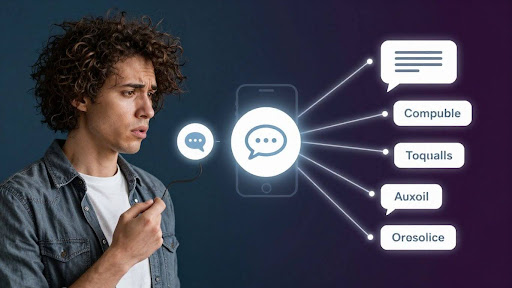
So, we’ve talked about the problems, right? Customers get bounced around, feeling like they’re talking to a different company every time they switch from chat to email to a phone call. This creates a fragmented customer experience. But what does it really mean when we say “AI-driven unified communication” in 2026? It’s not just about having a bunch of tools that can talk to each other. It’s about making them work together so smoothly, you barely notice the switch.
How AI connects calls, chat, and email into one seamless customer journey
Your customer starts a chat on your website asking about a product. The AI chatbot handles the initial questions, maybe even pulls up their account info if they’re logged in. If the issue gets a bit complicated or the customer asks to speak to someone, the AI doesn’t just hand off a ticket. It can provide agents with relevant conversation context to support smoother customer interactions. That agent then gets a heads-up on their screen about what’s going on, so the customer doesn’t have to repeat themselves. The same idea applies if the customer sends an email or makes a call. The AI is the glue, making sure all that information flows, so the next person (or bot) the customer talks to already knows the story.
The difference between multichannel and truly unified AI communication
This is where a lot of businesses get it wrong. Multichannel is like having a bunch of separate phone lines, email inboxes, and chat windows. They all exist, but they don’t really talk to each other. Your sales team might have one system, support another, and marketing a third. Information gets lost in the shuffle. Unified AI communication, on the other hand, is like having one central nervous system. It’s about context. When a customer interacts with you, that context follows them. The AI uses customer history and interaction context to provide more relevant and personalized responses, no matter which channel they’re using.
Here’s a quick breakdown:
- Multichannel: Multiple ways to contact you, but they operate independently.
- Omnichannel: Channels are connected, but often still require some manual effort to pass information.
- UnifiedAI Communication: AI actively manages the flow of information and context across all channels, creating a single, continuous experience for the customer.
The goal isn’t just to be available on more platforms. It’s about making sure that when a customer reaches out, the system already knows who they are, what they need, and how to best help them, without them having to explain it all over again. That’s the real power of AI in unifying these different touchpoints.
How AI automation fixes each channel and ties them together
AI chat: engaging visitors before they leave your website
Look, people get impatient online. If they can’t find what they need quickly, they often leave the website without taking action. AI chatbots are like having a super-fast, always-on assistant ready to answer questions the second they pop up. They can figure out what someone’s asking, even if it’s phrased a bit weirdly, and give them the right info. This means fewer people bounce off your site because they got stuck. It’s about catching them when they’re interested and guiding them forward, not letting them wander off.
AI email: responding to common inquiries quickly while reducing manual workload
Email used to be a black hole for customer service. You send a message, and then you wait. And wait. AI changes that. It can read incoming emails, understand the main point, and even draft a reply or pull up the right information. This happens instantly. So, instead of a customer waiting hours or days, they get a response almost immediately. This isn’t about replacing people entirely, but about handling the bulk of the simple stuff so your human team can focus on the really tricky problems.
AI call analytics: understanding what customers actually said and felt on every call
Phone calls are tricky. You can’t easily search them or see what’s going on. AI changes that by listening to calls and not just transcribing them, but also picking up on the customer’s mood. Was the customer frustrated? Confused? Happy? AI can flag these things. This helps you see patterns in what’s going wrong or right. You can then use this info to train your agents better or fix problems in your product or service that keep coming up on calls. It turns a bunch of spoken words into actionable insights.
When you combine these AI tools, they don’t just work in isolation. They start talking to each other. An AI chatbot can gather info, and if the customer needs to talk to someone, that info is passed to the human agent. An AI analyzing emails can flag a recurring issue that then gets added to the knowledge base for the chatbot. It’s about making the whole system work together, so the customer doesn’t have to repeat themselves or get lost between different departments.
Real business outcomes: what happens when you unify call, chat, and email with AI
So, what does all this AI-powered connection actually do for a business? It’s not just about fancy tech; it’s about real results that you can see on the bottom line. When you stop letting customers fall through the cracks between your phone lines, chat windows, and email inboxes, things start to change. And not in a small way.
How a 35% increase in lead conversions happened in two months with AI chat
Imagine this: a potential customer lands on your website. They have a quick question, maybe about pricing or a specific feature. If they have to hunt for a phone number or wait for an email reply, they might just click away. But with AI chat working around the clock, that question gets answered instantly. The AI can even guide them through the initial steps of a purchase or sign-up.
One customer reported a 35% increase in lead conversions after implementing an AI chat widget. Results may vary depending on business type and customer journey. It wasn’t magic; it was just being there, ready to help, the moment someone showed interest. The AI didn’t just answer questions; it kept people engaged and moving forward.
Cutting support response time in half without adding a single agent
Think about your support team. How much time do they spend answering the same basic questions over and over? Or digging through different systems to find customer information? It’s a lot, right? AI takes a huge chunk of that off their plate.
Here’s how it works:
- Instant Triage: AI reads incoming emails and chat messages, figures out what the customer needs, and even pulls up their history. This means when an agent finally sees the ticket, they already have the context.
- Automated Responses: For common questions, AI can draft accurate and context-aware replies instantly, using the right tone and information. No more typing out the same thing ten times.
- Smart Routing: AI knows which agent is best suited to handle a specific issue, so tickets get to the right person faster.
The result? Support teams can handle more inquiries without feeling overwhelmed. They spend less time on repetitive tasks and more time solving complex problems. This drastically cuts down the time it takes to get back to a customer. Some businesses report significant reductions in response times after implementing AI-powered customer engagement tools. And the best part? You achieve this without needing to hire more people.
It’s about working smarter, not harder, and making sure your customers feel heard and helped, no matter how they reach out.
Bringing It All Together
So, we’ve talked a lot about how customers get lost in the shuffle between different ways of contacting you. It creates disconnected customer interactions that lead to frustration and inefficiency, and nobody’s happy. But the good news is, it doesn’t have to be this way. By using smart tools like AI for your calls, AI for chats, and AI for emails, you can actually make things smoother. Think about it: instant answers, remembering what you talked about last time, and getting help whenever you need it. It’s not about replacing people, but about giving them superpowers so they can actually focus on helping you when it really counts. Getting this right means happier customers who stick around, and honestly, a less stressful day for your team too. It’s a win-win, really.
Businesses that unify customer communication across calls, chat, and email are better positioned to deliver faster responses, improve customer satisfaction, and capture more opportunities. Explore how Onivaan’s AI-powered communication tools can help create a more connected customer experience.
Frequently Asked Questions
Why do customers leave when they switch between talking on the phone, chatting online, and sending emails?
Customers get frustrated when they have to repeat themselves or start over every time they use a different way to contact you. If your phone, chat, and email systems don’t talk to each other, it feels like a broken experience. This makes them feel like you don’t care about their time or their problem, and they’ll often go somewhere else.
What is ‘AI-driven unified communication’?
It means using smart computer programs (AI) to connect all your customer communication channels – like phone calls, website chats, and emails into one smooth system. Instead of each channel being separate, AI helps them work together so the customer’s conversation can move easily from one to another without interruption.
How can AI help with website chat?
AI can power chatbots that instantly greet website visitors and answer their common questions right away. This keeps visitors engaged and helps them find what they need quickly, even before a human agent has to step in. It’s like having a helpful assistant available 24/7.
Can AI really answer emails instantly without a person reading them?
Yes, AI can be trained to understand the main point of many emails and send quick, accurate replies for common questions. For more complex issues, AI can sort and prioritize emails, making sure human agents see the most important ones first and have all the needed information ready to go. This speeds things up a lot.
What does ‘AI call analytics’ mean for understanding customers?
AI can listen to recorded phone calls and figure out not just what the customer said, but also how they sounded – were they happy, angry, or confused? It can spot patterns in what people are saying across many calls, helping businesses understand common problems and how customers feel about their service.
What are the real benefits of using AI to connect calls, chat, and email?
Businesses see more customers become buyers because their questions are answered faster and more smoothly. Support teams can handle more inquiries without getting overwhelmed, and they can solve problems more quickly. This leads to happier customers who feel understood and are more likely to stick with your business.
Latest Post

What Our Client
After deploying the AI chat widget on our website, we experienced a 35% increase in lead conversions within the first two months. The chatbot instantly engages visitors, qualifies prospects, and routes high-intent inquiries directly to our sales team. It works 24/7, ensuring we never miss an opportunity — even outside business hours.
Marketing Director
The AI Email Responder completely transformed how we manage customer communication. It automatically categorizes, prioritizes, and responds to hundreds of daily inquiries with accurate, human-like replies. Our team now focuses on strategic growth instead of repetitive emails, and our response time has improved dramatically.
E-Commerce Founder
Onivaan’s AI solution streamlined our entire customer support process. We reduced response times by over 50% and significantly increased customer satisfaction scores. The system handles FAQs, appointment scheduling, and common troubleshooting instantly, allowing our support agents to concentrate on complex cases.